


VICTIM OF JEALOUSY by Lobar Rustamova
I saw my son, your music teacher Alisherjon. I love you praised. I am so glad that you are taking it easy.
“Merciful has a juicy voice. It is necessary to educate him. You need to find a good teacher,” she said.
Rukhsor’s mother was tall, hot-tempered, and black-eyed.
He caresses his youngest son, whose black hair falls on his forehead.
“If you become a great singer, you will be excused by seeing Tashkent when you come, my son. God willing! It’s enough if I get into the study, the first one, I’ll do this. All I have to do is turn you around in the city.”
“I wish that. But… can I go to the conservatory, honey?”
“They will get it, my son, they will get it. Hearing your voice, they are also fascinated by you will remain.”
“Oh, you exaggerate. How many people are like me?”
“Never mind. God created everyone with His provision, my child…”
Rakhimjon could not go to Tashkent after finishing school. What would his mother find? He entered the school of music education with the help of his teachers. He learned to sing ghazals.
“To the point where you can still play big songs with ease, you can do it, my son,” said his teacher Gani, happy with his student’s ability.
At the Youth Festival held in the region in the year of graduation from the country of knowledge, Qora Ko’zim sung with Rakhimjon Navoi’s ghazals at the festival. He won first place by performing the songs Kelmadi. One of the well-known singers in his panel introduced himself as Muslim, an old, tall man. He hugged Rahimjon and pressed him to his bosom:
“My son, you have a bright future. This is my address. If you go to Tashkent, find me. I will help you to study,” he said.
On this day, Rakhimjon’s joy was boundless. He was flying in the sky.
When he got home:
“Mum, congratulate me,” he said. “They gave first place to me. After a month, we will go to Tashkent. If I get a place there, I will enter the conservatory without exams.”
“Learn from my smart son. Don’t let your eyes touch your voice, my child.
May God protect you from calamities.”
“What you say…”
Mukhsinjan, who won the second place at the festival, lights up a lamp inside. It didn’t light up.
“Will all my hard work and efforts go to waste?
I dream of singing in Tashkent, on big stages, after all…”
Mukhsin could not sit at home. Mother’s:
“Hey, hey, where are you going in the evening,” he said, but he went to his teacher’s house.
On the day he came home, he asked for a rug to hang on the carpet.
“I want to call…”
He tried to hum, matching the tune, but his voice did not come out. Then he cried.
“I can never sing again, honey? Why, why?! To me, what happened? What happened?”
Mental depression and illness overcame him. He was bedridden. Mukhsinjan was in Tashkent in those days. He took part in the competition and got a rank. After receiving it, he was accepted to study. He was extremely happy.
“Master, I have achieved my intention. I am very happy,” he said on the way back.
“Now be diligent. Good job.”
“Of course.”
“I heard that your friend is sick. Did you get the message?”
“If we can get there safely today, I will definitely go see him.
I couldn’t get a message because I was busy with preparations.”
“Do so. He is very talented. Get well, my God…”
“God willing…”
Muhsinjan said in his heart:
“He will never sing again. He can’t tell. He won’t get better,” he kept thinking. The villain who did it, he was calm because his work was clear only to God and to himself.
No cure was found for Rakhimjon’s pain. The old man brought by his uncle, the doctor, said that mercury might have been added to the drink because it is quickly absorbed into the blood. It is difficult to detect and treat maybe. It turned out that the young man committed suicide.
During autumn days, more precisely, on the twenty-eighth of October, Rahimjon passed away at the age of twenty.
There was no one left who did not burn and cry. It’s raining non-stop on this day. It poured.
Mukhsinjan’s popularity increased. In large gatherings, they invited Mukhsinjan to weddings. He was full and had a belly. He bought a car.
Tashkent became a step toward it.
On one of those days, it was snowing in January. In his twenties, Mukhsinjan had a car accident on his way home from work. The car fell into a ravine. What he was thinking in his last breath is unknown. But he was punished for what he did.
Many years have passed since this event. Rakhimjon’s mother is also getting old and has passed away. But his instrument and his picture are still hanging on the carpet.
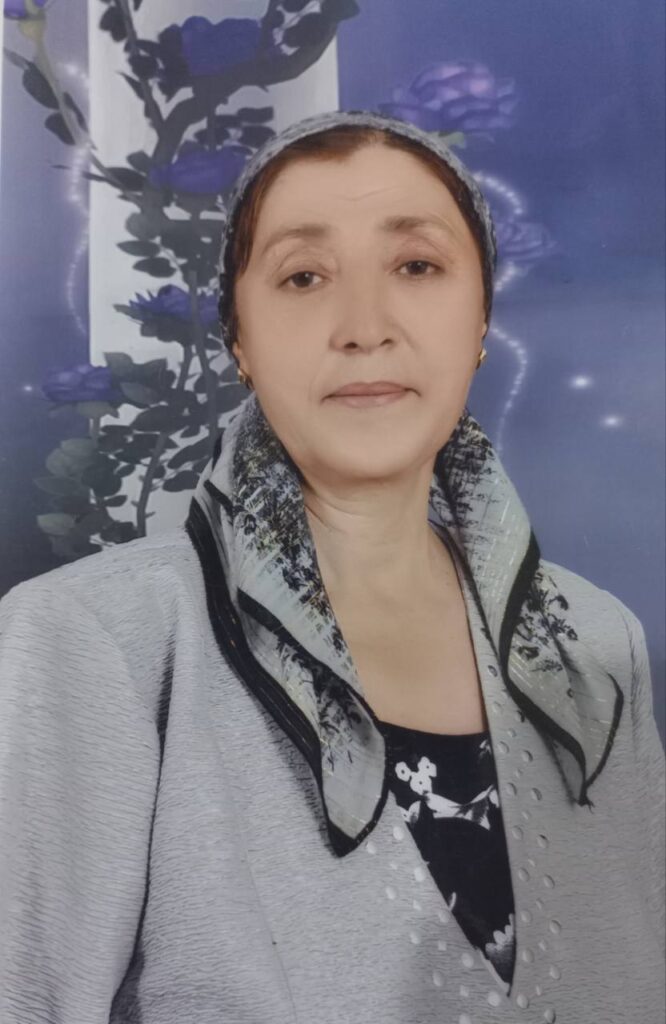
About the Author:
Lobar RUSTAMOVA was born on January 1, 1955 in Yangikurgan District, Namangan Region.
In 1975, he graduated with honors from the faculty of Uzbek language and literature of Namangan State Pedagogical Institute.
Member of the Union of Writers of Uzbekistan. "Trails adjacent to the highway" co-authored (2000), "Telling Alla in the River" (2004), "Oymomo Smiles" (2004), "Ishq Azori" (2007)
"In the Spider's Web" (2009) "A Life of Virtue" (2011) "Tragedy on the Mountain" (2011) "The Address of Happiness" (2017) "It Was Still Winter" (2021) "The Scales of Fate" (2022)  )"Treasure at the bottom of the lake"( 2023),"Longing strewn road"  (2024) is the author of books. Examples of creations were published in newspapers and magazines and websites of Turkey, Azerbaijan, Kenya, Italy, Germany, Kyrgyzstan, Belgium.
In America and France, the stories "It was still winter" and the short stories "Scale of Fate" were published in English and French.
She has the badges "25 years of Independence of Uzbekistan", "Reputable Woman" and "World Talents" of Kazakhstan. Awarded the "Abay" medal of the International Association.
